
Confessions of a PHP 8.5 Fan: New Features, Community Quirks, and Developer Realities
The first time I attended a PHP meetup, someone handed me a sticker that just said, 'Heat.' Maybe it was the room, maybe it was the new release buzz—but from that point on, I knew the PHP world did things a little differently. Fast-forward to today: with PHP 8.5 out, the community’s still just as fervent, divided, and, dare I say it, oddly charming. In this post, I’ll share what’s genuinely exciting (and occasionally confusing) in PHP 8.5, plus a few not-so-official tales from the trenches. PHP 8.5 Features I Didn’t See Coming (And Why They Matter) Static Closures in Attributes: Cleaner, Smarter, and Long Overdue When I first saw the PHP 8.5 features list, the ability to use static closures in attributes and constant expressions immediately caught my eye. For years, I’ve wanted a way to define logic in attributes without awkward workarounds. Now, with PHP 8.5, you can do this: #[MyAttribute(static fn() => 'hello')] It’s cleaner, more expressive, and finally brings PHP attributes up to par with what developers expect from modern languages. Honestly, I’m still wondering why it took so long, but I’m just glad it’s here. This update means less boilerplate and more readable code, especially for frameworks and libraries that rely on attributes for configuration. Pipe Operator: Slick Syntax, But Not Prime Time (Yet) The pipe operator (|>) is probably the most debated of all PHP 8.5 new features. It promises a more functional style of programming, letting you chain operations in a clear, readable way. Here’s a quick example: $result = $data |> array_filter($$) |> array_map(fn($x) => $x * 2, $$); But let’s be real: the current implementation feels a bit half-baked. As I said on launch day, "The pipe operator combined with the improvements that will be made on it for PHP 8.6 will become good. I don't think the pipe operator is any good at the moment, but it will be very good on the next version of PHP." The community is split—some love the direction, others want to see more polish. For now, it’s a taste of what’s coming, and I’m excited to see it mature in PHP 8.6. Clone With Syntax & Array Functions: Less Boilerplate, More Expressive Two more PHP 8.5 updates that made my daily coding smoother: the new clone with syntax and the introduction of array_first() and array_last(). The clone with lets you copy objects with modifications in a single line, and the new array functions mean no more custom helpers just to grab the first or last element: $first = array_first($array); $last = array_last($array); It’s a small change, but it adds up to cleaner, more readable code. URI Extension: Out-of-the-Box Parsing, Finally One of the most practical PHP 8.5 features is the new URI extension. PHP finally gives us a built-in way to parse and manipulate URIs without relying on external libraries or fragile regex. This is a huge win for anyone building APIs or web apps that need to handle URLs reliably. With the URI extension, parsing, modifying, and validating URLs is now first-class and consistent. It’s one of those features that makes you wonder how we ever lived without it. Release date: November 20, 2025 Key features: Static closures in attributes, pipe operator (partial), array_first(), array_last(), URI extension Community quirks: Ongoing debates about the pipe operator’s readiness The Laravel Divide: Tall Stack, Inertia, and My Weekend Coding Adventure Within the Laravel community, there’s a clear divide when it comes to building modern web apps: the tall stack (Laravel, Livewire, Alpine.js, Tailwind) for solo and freelance projects, versus Inertia.js and React frontend for company-driven work. As a PHP developer who’s lived both sides, I’ve seen how these choices shape our daily experience and even the culture of our teams. Lightning-Fast Solo Builds: Why I Love the Tall Stack Let me confess: when I’m working on my own projects, the tall stack is my go-to. It’s just fast. I can whip up a prototype or even a full product in a fraction of the time it would take with a full-blown SPA setup. Case in point: I built pinky.com, a social media platform, over a single weekend using the tall stack. The speed comes from the tight integration of Laravel, Livewire, and Alpine.js—no context switching, no API headaches, just pure productivity. "If you are a Laravel developer and you basically already mastered a tall stack, it's probably the best way of making stuff happen, you know." Many solo devs and freelancers in the Laravel community echo this sentiment. The tall stack feels like the “GOAT” for personal projects—fast, familiar, and incredibly efficient for those who’ve mastered it. Company Gigs: Inertia.js & React Rule the Roost But when I step into a company setting, the reality shifts. Most organizations default to Inertia.js with a React frontend. Why? It’s simple: the frontend talent pool is saturated with React developers. If you want to hire or collaborate with skilled frontend engineers, React is the lingua franca. Even if I personally move faster with the tall stack, market realities mean that Inertia and React are often non-negotiable in team environments. Hiring ease: React devs are everywhere; Livewire/Alpine experts are rare. Team familiarity: Most frontend teams already know React, not Livewire. Long-term maintenance: Companies want tech that’s easy to staff and scale. This split is a recurring theme in the Laravel ecosystem: solo devs gravitate to the tall stack for speed, while companies lean on Inertia and React to tap into the broader frontend market. Framework Mashups: Filament vs Nova (And Why It Feels Awkward) Mixing multiple frontend frameworks—say, React with Filament or Nova—can feel like inviting too many DJs to one party. The result? A legacy vibe and added complexity. Each framework brings its own conventions, tooling, and quirks. In my experience, this mashup often slows down development and muddies the PHP developer experience, especially when you’re juggling Livewire, Alpine.js, and React in the same codebase. Ultimately, the Laravel community is split: the tall stack shines for rapid solo builds, while Inertia.js and React dominate in company settings. The choice isn’t just technical—it’s about speed, hiring, and the realities of modern PHP development.Beyond Code: Events, Sponsors, And Life in the PHP Lane If you think being part of the PHP community is just about writing code, think again. The real magic happens beyond the IDE—at events, in group chats, and yes, even during those legendary after-event pub crawls. Take PHP Lisbon for example. On the surface, it looked like a modest gathering, but behind the scenes, we had about 40 passionate developers in the room and over 100 more tuning in live from Twitch, YouTube, Twitter, and TikTok. The energy was palpable, and the conversations—both technical and casual—reminded me why I love this community. "PHP Portugal for the win. Another event for the books." Events like PHP Lisbon are more than just talks and workshops. They’re where the PHP community comes alive, where new friendships are forged, and where ideas bounce from laptops to napkins and back again. Even if you couldn’t make it in person, the live streams and recordings meant you were still part of the action. This is the new normal: meetups that blend offline and online, making sure no one is left out, no matter where they code from. But let’s be real—none of this would be possible without our sponsors. A huge shout-out to JetBrains (the minds behind PHPStorm), Redberry International, Devon AI, Code Rabbit, and Lotas.com. Their support keeps the lights on, the coffee flowing, and the swag bags full. Good tools matter, and so do the people and companies who believe in the PHP ecosystem enough to back it with resources. Whether it’s a license for the best editor in the world or a free t-shirt, these sponsors help make our community gatherings possible and memorable. Of course, the PHP community isn’t without its quirks. Someone recently asked about the gender ratio at our meetups, and it’s a fair question. The truth is, like much of the tech world, PHP events still skew male. We do our best to encourage gender diversity in tech, but there’s more work to be done. It’s a conversation we need to keep having, and it’s on all of us to make our spaces more welcoming and inclusive. The more perspectives we bring in, the stronger our community becomes. So, what’s life really like in the PHP lane? It’s a blend of code sprints, late-night debugging, and shared laughter over pizza. It’s the thrill of a new PHP 8.5 release, the camaraderie of a well-run meetup, and the satisfaction of seeing your work help someone else. As we look ahead, let’s keep showing up—online and offline, for each other and for the language we love. The PHP community is more than just code; it’s a place to belong. TL;DR: PHP 8.5 isn’t just another update—it’s a quirky leap forward, sparking fresh debates, empowering new workflows, and keeping the community as lively (and divided) as ever. If you’re eyeing the latest features or just want to peek into the PHP scene, this release is worth your attention.Hats off to nunomaduro for the valuable content! Be sure to check it out here: https://www.youtube.com/watch?v=EfIujHUXIwI.
Ammar Shrestha
Dec 3, 2025 • 8 Minutes Read
Dec 3, 2025
Why PHP 8.5 Feels Like a Release Just for Developers (And Why That's a Good Thing)
The moment I heard about the upcoming PHP 8.5 release, I couldn't help but think back to my first encounter with PHP—a language equal parts forgiving and infuriating. Now, with 8.5 arriving soon, the excitement is real. It’s not flashy, but the new features feel like they’re made by developers, for developers. Let’s dig into the stuff nobody will brag about at parties, but every coder will secretly appreciate. My Quirky History with PHP, or How I Learned to Stop Worrying and Love Upgrades My PHP journey began debugging PHP 4 scripts in a chilly basement office—where every variable felt like a cryptic puzzle. Naming temp vars was an art (and a headache), so the PHP 8.5 developer upgrade feels like a personal gift. Each upgrade has reshaped my daily coding rituals: sometimes for better, sometimes with new quirks. I still remember the weirdest bug—a session variable vanishing on Tuesdays—fixed only by a later update. That’s why I love PHP 8.5 improvements focused on developer experience, not just flashy features. These subtle changes, like the pipe operator, mean fewer temp vars and cleaner code. As Samantha Lee, Senior PHP Engineer, says: "Every new PHP release is a fresh set of superpowers—sometimes invisible, always handy." It’s the unsung, practical upgrades that quietly save us hours.The Pipe Operator: PHP’s New Code Ninja Move PHP 8.5’s most anticipated feature is the pipe operator (|>), and trust me, it’s more than just syntax sugar. This new tool lets you chain functions together, eliminating those messy temporary variables. For example, cleaning up an email now looks like this: " TEST@EXAMPLE.COM " |> trim() |> strtolower() |> sendEmail(); Before PHP 8.5 developer-friendly changes, you’d write three lines and juggle temp vars. Now, your logic flows—just like in JavaScript or Elixir. But beware: chain too many functions, and debugging gets wild! As Priya Chandran says: "The pipe operator is the duct tape of readable code—it just holds your logic together neatly." If Shakespeare had PHP 8.5, he’d muse: “To chain, or not to chain…”Streamlining Arrays: Small Changes, Big Relief One of my favorite PHP 8.5 features is the introduction of array_first() and array_last(). These new PHP 8.5 array functions finally put an end to the clunky hacks we used for grabbing the first or last item. Why did array manipulation always feel awkward? I remember when we relied on for-loops or reset() and end()—simple, but easy to break. Recently, I refactored a legacy search result parser. Before, extracting the first match meant extra checks and brittle code. Now, array_first($results) just works—no more edge-case bugs. The code is cleaner and easier to read. As Alex Romano, Full Stack Developer, puts it: "Little functions like array_first() are the glue that makes big systems less painful to debug." Quality-of-life improvements like these make everyday tasks less error-prone and more joyful.Debugging, Error Handling, and the Developer’s Sixth Sense PHP 8.5 debugging capabilities take a real leap forward. With get_exception_handler() and get_error_handler(), I can finally introspect my current error and exception handlers—no more murder-mystery debugging where the culprit is a missing handler! Improved stack traces for fatal errors mean I spend less time guessing and more time fixing. As Kareem Abbas, DevOps Lead, puts it: "Debugging is less about skill and more about tools—PHP 8.5 gives us better ones." For complex setups, the new CLI command php --ini=diff highlights configuration differences, making those “why won’t it work on staging?” moments a thing of the past. These behind-the-scenes features in the PHP 8.5 release notes mean less midnight hair-pulling and more confidence when tracking down bugs.Memory, Security, and the Invisible Stuff Developers Dream About Some of the best parts of PHP 8.5 are the ones you’ll never see directly. Under the hood, smarter PHP 8.5 memory management and garbage collection tweaks mean your apps run smoother and scale better. On the security front, PHP 8.5 security enhancements bring sharper error reporting, improved resource handling, and even better internationalization with functions like locale_is_right_to_left() and Locale::isRightToLeft(). Fun fact: PHP’s commitment to PHP 8.5 backward compatibility means upgrades rarely break your code. There’s even a new PHP_BUILD_DATE constant for reproducible builds and easier deployment tracking. As Elena Volkov, Security Engineer, says: "The best upgrades are the ones you never notice—until you look at your logs." These invisible improvements quietly support reliable, secure, and global applications.PHP 8.5 Release Notes: What to Watch Out For (and What Not to Worry About) Mark your calendars: the official PHP 8.5 release date is November 20, 2025. This update is all about developer productivity, not disruptive change. The headline features—like the new pipe operator, enhanced array functions, improved debugging tools, and CLI enhancements—make daily coding smoother. If you’re on PHP 8.4, the upgrade path is friendly, with minimal breaking changes. The PHP 8.5 deprecation list is short: legacy odds and ends like MHASH_* constants and alternative scalar type names are being retired. As Matteo Lanzini puts it, "Upgrading to 8.5 is a low-stress leap, not a blind jump." My PHP 8.5 upgrade recommendation: teams focused on stability and productivity should jump in early. Quick tip—always test in staging, even with ‘easy’ upgrades.Conclusion: More Boring, More Brilliant—That’s Why PHP 8.5 Wins PHP 8.5 improvements may not grab headlines, but they’re exactly what a mature language needs. This PHP 8.5 developer upgrade is all about those subtle, daily joys—like the pipe operator quietly shaving minutes off my workflow. The best part? One morning, PHP 8.5 actually caught a typo in my code before my coffee even kicked in. That’s the kind of invisible brilliance that makes our workdays smoother. As Maggie Watts, CTO, says, "Great software is improved in quiet releases." I truly appreciate how the PHP team listened to real developer needs instead of chasing flashy features. Embracing these less glamorous upgrades is what keeps our projects robust and our code clean. Here’s to more “boring” releases—because that’s where the real brilliance lives. TL;DR: PHP 8.5 isn’t a revolution, but it offers a pile of fixes and features that make everyday development smoother. Power up your workflow with the pipe operator, smarter arrays, better debugging tools, and a handful of developer-centric improvements. Give it a spin; your codebase (and your sanity) will thank you!
6 Minutes Read
Nov 2, 2025
What's New in Livewire 4: Key Features for 2025
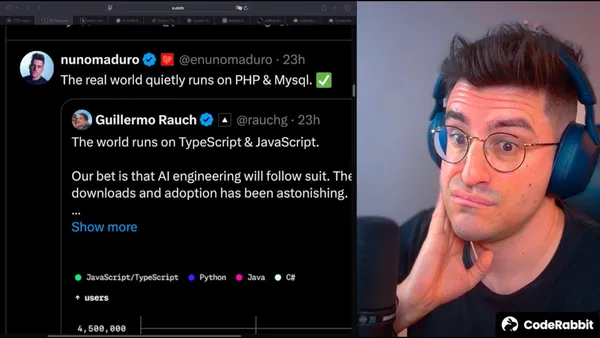
I’ll be honest—my week didn’t start out thinking I’d be hotly debating backend tech, let alone investigating mysterious Twitter API quirks and Livewire 4’s rise. But then two things happened: first, an unassuming tweet from the Vercel CEO set off a storm about which language really “runs the world.” Second, a flurry of Livewire 4 news had my group chat burning up with opinions, memes, and half-baked migration plans. If you’ve ever been caught between hype and hard numbers, or just love the way developer communities pulse with energy (and a little chaos), you’ll get where I’m coming from. Buckle up—this isn’t your mom’s changelog recap.Livewire 4 Unleashed: More Than A Simple UpgradeWhen I first opened up a Livewire 4 project, I felt a mix of excitement and confusion—like stumbling across a hoverboard in a garage full of rollerblades. But after diving in, it’s clear: Livewire 4 is not just an upgrade; it’s a whole new way of building Laravel apps. Let’s break down what makes Livewire 4 features so influential for the Laravel ecosystem.Single-File Components: The Heart of the View-First SystemLivewire 4 introduces single-file components, a game-changer for anyone who loves clean, organized code. With the new .wire.php file format, you can combine your PHP logic, Blade markup, and even JavaScript into one file. This view-first approach means your components are easier to manage and reason about. I found myself moving faster, with less context-switching and fewer files to juggle.Performance Improvements: Blaze Compiler Brings the HeatPerformance is where Livewire 4 truly shines. The new Blaze compiler is at the core of these improvements, reportedly making Blade rendering up to 10x faster. This isn’t just a small bump—it’s a leap. Whether you’re building dashboards or dynamic forms, the speed boost is instantly noticeable. As Caleb Porzio highlighted at Laracon US 2025, these changes are all about making the developer experience smoother and more productive.Blade-Style Slots & Enhanced Component FlexibilityAnother standout in Livewire 4 features is support for Blade-style slots and flexible component attributes. This means you can create more reusable, dynamic components with cleaner syntax. Enhanced loading states and smarter data-loading attributes also make your UI feel more fluid and responsive. For me, this flexibility is a huge win—components now feel as powerful as those in React or Vue, but with the simplicity of Blade.Migration: Not Required, But Worth ItIf you’re coming from Livewire 3, migration isn’t mandatory. But embracing the new .wire.php structure and performance improvements unleashes the real power of Livewire 4. The upgrade path is smooth, and the payoff in speed and developer happiness is immediate."Livewire 4 is one of my favorite front-end frameworks alongside React."Livewire 4 isn’t just keeping up with the JavaScript ecosystem—it’s setting a new standard for Laravel development.Backend Battles & The Vercel CEO’s Hot TakeLet’s talk about the moment that set PHP and Laravel developers buzzing: the Vercel CEO’s claim that “the world runs on TypeScript and JavaScript.” This statement, delivered during a keynote and backed by a flashy graph, was meant to highlight the meteoric rise of JavaScript (and TypeScript) in backend development. But for those of us deep in the trenches of Laravel development 2025, Livewire 4, and the broader PHP ecosystem, it felt like a direct challenge—one that didn’t quite match the real numbers.What the Vercel CEO Actually ClaimedThe CEO’s words were clear: JavaScript and TypeScript are “running the world.” The supporting graph showed downloads and GitHub activity, painting a picture of total JavaScript dominance. But here’s where the backend battles heat up. Many of these stats rely heavily on GitHub metrics—numbers that can be inflated by bot pull requests, automated dependency updates, and the sheer volume of JavaScript packages. It’s easy to get the illusion that JavaScript is everywhere, but is that the whole story?Why PHP Developers Were FumingAs someone who lives and breathes PHP, my first reaction was disbelief. I know, and the data backs it up: over 70% of the web still runs on PHP. That’s not just WordPress, but also platforms like Drupal, Magento, and modern frameworks like Laravel and Livewire 4. When people dismiss these as “just WordPress,” I have to ask—if you count React or Vue.js for JavaScript, why not count WordPress for PHP? It’s all part of the real backend landscape.The Real Pulse: PHP vs JavaScript BackendThe backend wars are about more than code—they’re about developer identity. The Vercel CEO’s claim sparked a wave of replies and memes, but the facts remain: “The real world runs quietly on PHP and MySQL, which is something I truly believe on still.” Laravel, Livewire, and the vast PHP ecosystem power the majority of websites, even if JavaScript gets the hype.GitHub stats can be misleading—bots and automated updates inflate JavaScript numbers.PHP powers 70%+ of the web, including giants like WordPress.Backend battles are as much about culture as technology.Sometimes, the best reply is hard data. Other times, a well-timed meme says it all.Easter Eggs: Twitter APIs & Laravel’s AI FutureYou know you’re deep in the trenches of web development when a stray 404 status code sparks a revelation about how the internet really works. This week, while poking around Twitter’s internal APIs, I stumbled on something that felt like an easter egg for backend nerds: some telemetry and analytics endpoints were returning 404 errors. At first, I chalked it up to a bug—after all, if the frontend is reaching out and the backend just shrugs with a “not found,” that usually means something’s broken. But the more I dug, the more interesting it got.Curious, I asked an AI assistant for its take. The response?"The AI said that 404 also prevents caching like cache control...which helps hide the endpoint from bots, which is insanely interesting." That’s a subtle but powerful trick: by returning a 404 instead of a 204 (which simply acknowledges the request with no content), Twitter’s backend can keep bots and aggressive scrapers at bay, while also avoiding unnecessary caching. It’s a tiny detail, but it reveals how even the smallest API choices ripple out into real-world security and performance. When I tweeted about this, it hit a nerve—1,600 likes later, it was clear that the developer community is hungry for these behind-the-scenes insights.Why does this matter for Laravel developers? Because the same kind of quiet innovation is happening in our ecosystem. Taylor Otwell’s announcement of the Laravel AI SDK is a perfect example. As we head toward Laravel development in 2025, AI-enhanced workflows are moving from the edges to the core of our toolkits. The Laravel AI SDK isn’t just a shiny add-on; it signals a future where backend frameworks like Laravel will seamlessly bake in AI and smarter data layers—sometimes without us even noticing. The migration to Livewire 4 and the evolution of Laravel development tools are all part of this bigger shift.My bet? The next wave of backend frameworks will quietly integrate AI, just like Twitter’s hidden 404s—subtle, powerful, and mostly invisible until you know where to look. That’s the real pulse of Laravel development: constant evolution, hidden in plain sight, and always a step ahead.TL;DR: Livewire 4 is more than a version; it's a signal of where Laravel—and the broader PHP community—is headed, with fresh features, hot debates, and a relentless energy you’d have to see to believe.
7 Minutes Read